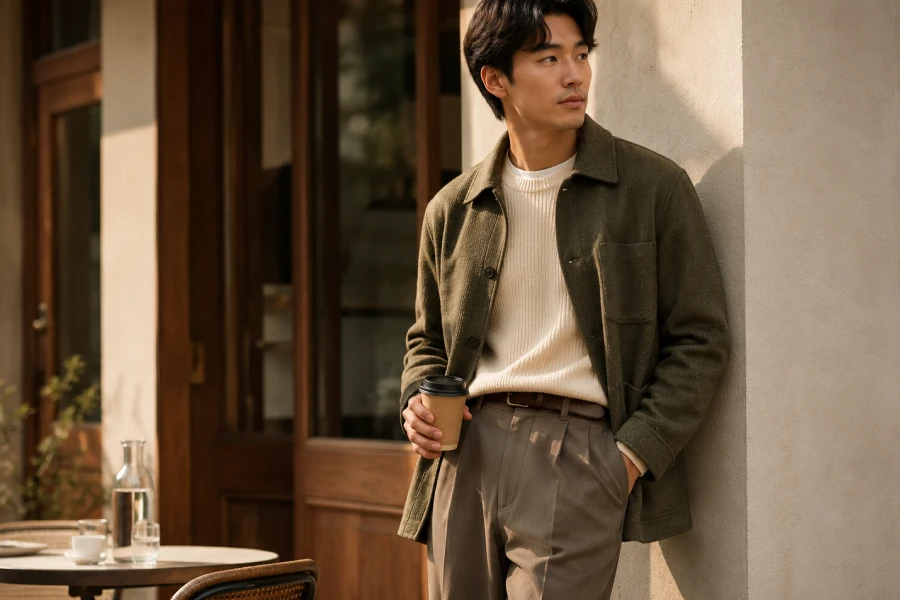
Confident everyday styling does not require dramatic clothes. It often begins with texture, proportion, and small decisions. A simple outfit can feel rich when surfaces contrast well. Cotton, denim, wool, satin, leather, linen, and knitwear each create a mood. When those moods combine intentionally, basics become more expressive. This is useful for real life. Most people need outfits that move through errands, work, meals, and plans. Texture adds interest without shouting. It also makes repetition feel less obvious. Everyday style becomes stronger when the details do more work.
Tactile contrast makes familiar pieces feel fresh. Pair smooth with ribbed. Pair crisp with soft. Pair structured with fluid. These choices create everyday outfits that look considered. A cotton shirt feels sharper under a suede jacket. Denim looks softer beside a silk scarf. Knitwear gains polish with tailored trousers. Contrast does not need to be extreme. It simply needs to be visible. When texture leads, even neutral outfits feel layered. That is why good basics can still look memorable.
Everyday prints should match your schedule. A bold graphic may work for coffee and errands. A subtle stripe may feel better for work. A soft floral can suit weekend plans. Think about where the outfit needs to go. This keeps creativity practical. It also reduces self-consciousness. You can enjoy print without feeling overdressed. The print should support your energy, not fight it. When the choice matches the day, confidence feels natural. That ease is the point of personal style.
Color can make mixed fabrics feel intentional. Repeat one shade across different pieces. Use a shoe, belt, or bag to echo a print. Let statement fabrics sit within a controlled palette. This prevents the outfit from feeling scattered. A camel bag can connect printed trousers and a cream sweater. A burgundy shoe can repeat a floral accent. A navy knit can calm a patterned skirt. Small color echoes create harmony. They also make styling choices look deliberate. The outfit feels finished because the eye finds repetition.
Confidence fades when clothes feel uncomfortable. A beautiful outfit loses power if you keep adjusting it. Everyday styling must respect movement. Check waistbands, sleeves, shoes, and fabric weight. Choose pieces that let you sit, walk, and carry your life. Comfort does not mean sloppy. It means aligned with reality. A relaxed trouser can still look elegant. A soft knit can still feel refined. When comfort supports polish, your posture changes. You stop managing the outfit and start living in it.
One twist can make a simple outfit feel personal. Try an unexpected fabric mix. Add a patterned scarf. Wear textured shoes with clean basics. Use wardrobe creativity in a focused way. The twist should be easy to understand. It should not compete with everything else. This approach works because it keeps the outfit grounded. You look expressive, not overworked. People notice the style without seeing effort. That is a powerful everyday balance.
Repeating outfits is not a failure. It is a sign that you know what works. Texture and accessories can make repeats feel different. Change the shoe. Change the layer. Change the jewelry. Keep the base formula stable. This saves time and reduces decision fatigue. It also helps you build a recognizable style. The most stylish people often repeat strong ideas. They refine instead of constantly replacing. Everyday confidence grows when your closet supports repetition gracefully.
Style confidence grows through attention. Notice which fabrics make you feel polished. Notice which prints make you hesitate. Notice which combinations move easily through your day. Keep the lessons. Adjust slowly. You do not need to reinvent your closet overnight. Start with one texture contrast this week. Try one print pairing next week. Document what works. Over time, your instincts sharpen. Getting dressed becomes less about rules and more about trust.


Leave a comment