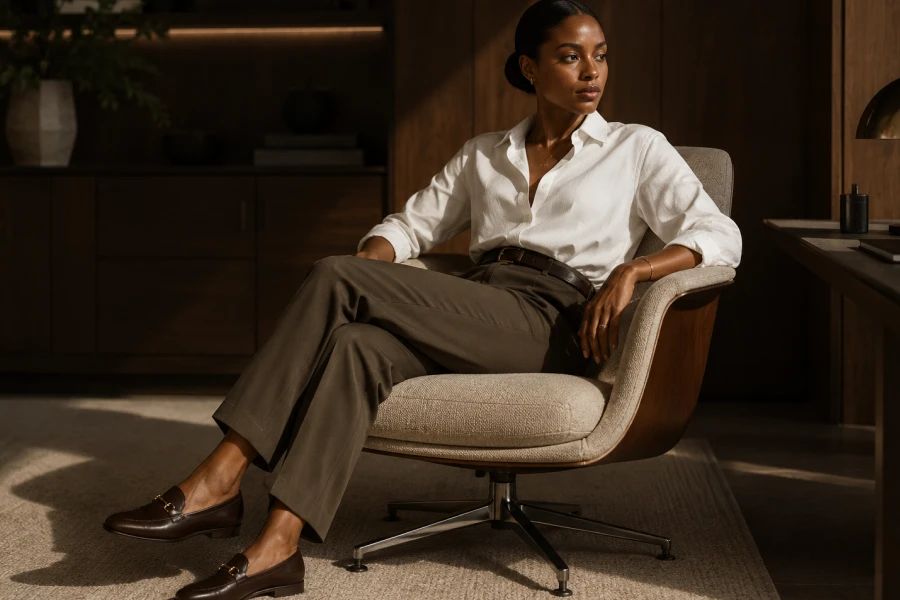
Professional wardrobe basics shape how you enter a room. They help you look ready before you speak. They also make your day easier. Strong basics create a foundation for style, not a uniform. They let you repeat outfits without looking careless. They support meetings, travel, presentations, and normal desk days. The right pieces make confidence feel practical. They also reduce last-minute stress. When basics work together, your presence becomes clearer. You look composed because your wardrobe already has structure.
Authority often starts with clean lines. A well-cut blazer, sharp trouser, or polished shirt can change posture instantly. These pieces communicate intention. They also support career wardrobe decisions that feel grown-up without feeling stiff. Basics should not erase personality. They should frame it. Think of them as the architecture of your look. Color, jewelry, texture, and shoes can add warmth later. Without the foundation, details lose impact. With it, every outfit feels more credible.
Workdays test clothing quickly. Fabric wrinkles. Shoes hurt. Waistbands dig. Sleeves restrict movement. The best basics handle pressure gracefully. They fit when you sit. They recover after a commute. They layer without bulk. They photograph well in unexpected moments. They make you feel prepared through the whole day. This is why trying pieces realistically matters. Do not judge clothes only in a fitting room. Move, sit, turn, and check comfort before deciding.
Different workplaces require different polish. A law office may need structured tailoring. A creative studio may reward texture and individuality. A startup may favor elevated ease. Your basics should match the room you actually work in. A polished office look does not have one universal formula. It changes by role, culture, and goals. Study the most respected people around you. Notice their level of refinement. Then translate that standard into pieces that feel authentic.
Neutral basics can still feel expressive. Texture gives them depth. Shape gives them character. Contrast gives them energy. A cream blouse looks different in silk, cotton, or ribbed knit. Black trousers change completely through cut and drape. Navy feels softer than black. Chocolate can feel warmer than gray. These details matter. They help basics avoid blandness. A neutral wardrobe becomes interesting when proportion and fabric carry the style.
Accessories shine when the foundation is calm. A strong watch looks sharper with a clean cuff. A belt matters more when trousers fit correctly. A bag feels intentional when it echoes your palette. This is where style strategy becomes visible. You do not need many accessories. You need the right few. Choose pieces that repeat across outfits. Keep finishes consistent. Use them to signal taste, not clutter. Your basics will carry the structure while accessories carry personality.
Editing is part of style. Remove pieces that make you hesitate. Keep pieces that help you act quickly. Try every basic with at least three outfits. If it only works once, question its value. If it works repeatedly, protect it. Professional wardrobes become stronger through subtraction. You create space for better combinations. You also see gaps more clearly. This makes shopping calmer. Instead of collecting options, you build a reliable system.
Consistency affects how people remember you. It creates a recognizable level of care. You do not need a dramatic outfit every day. You need a dependable impression. Basics help you repeat that impression without effort. They make good style available on tired mornings. They also help your career look mature over time. When your clothes support your goals, confidence becomes easier to access. That consistency can change how you feel at work. It can also change how seriously you take yourself.



Leave a comment